
Quick answer
- 함수 명세로 유닛 테스트 목록 뽑기 is useful when the reader needs the decision frame before the full tutorial.
- The practical answer is: Explain what 함수 명세로 유닛 테스트 목록 뽑기 changes, when it is useful, and how to verify it safely.
- Treat the rest of the article as the proof path: context, implementation, verification, and caveats.
The Short Answer
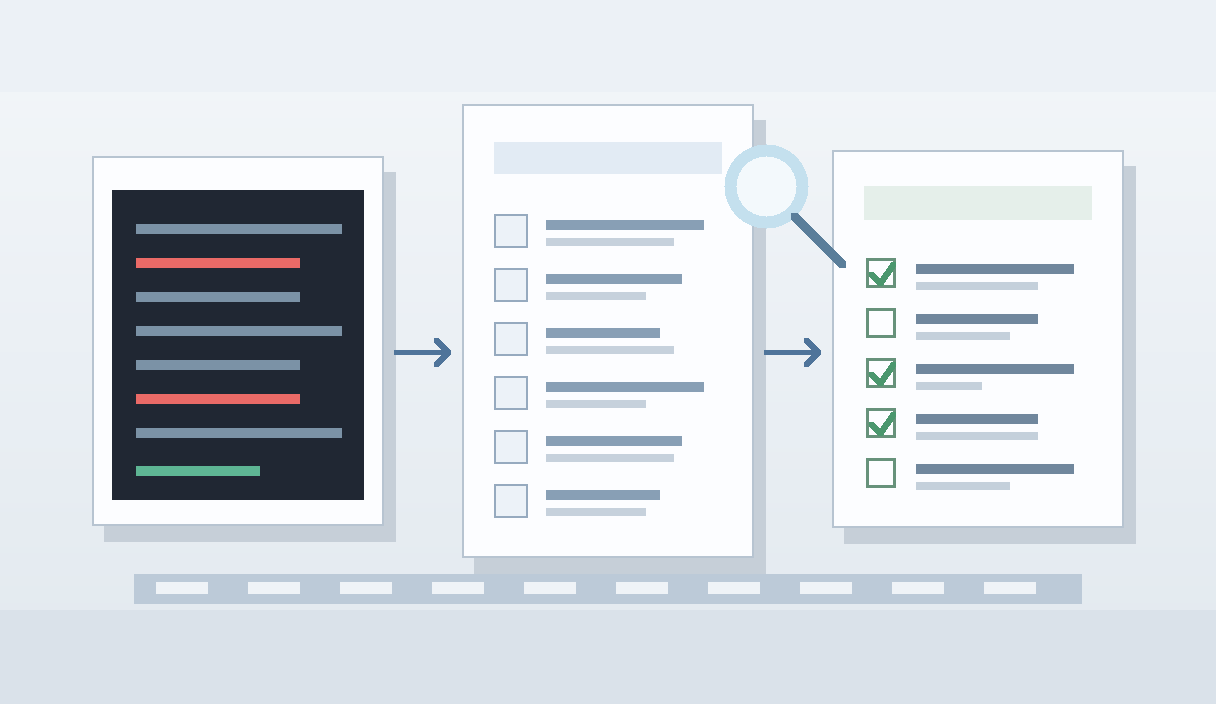
Paste your function spec into Claude Code and ask: 'Write a unit test list for this function, grouped into normal cases, boundary values, and exception cases. Add a one-line intent for each item.' You get a structured list you can immediately use as a scaffold for your test file.
Why This Matters Now
After finishing a function, deciding what to verify is often the step that gets skipped.One or two happy-path checks get written and the rest waits for 'later,' which usually never comes. Thin test coverage tends to get thinner the smaller the team.
Claude Code reads the input and output rules in your spec and surfaces edge cases that are easy to miss manually. Getting the list before you finish the implementation also sharpens the design: you know exactly what behavior you need to guarantee.
Step-by-Step
- Write down the function name, parameter types, return type, and any exception conditions in a short block. Full code is not required.
- In the Claude Code terminal, send this prompt: 'Read this function spec and write a unit test list grouped into normal cases, boundary values, and exception cases. Add a one-line intent to each item.'
- Review the list and follow up with 'This input is also possible — please add it' for anything missing.
- Once the list is final, follow up with 'Create a Jest (or pytest) test file stub based on this list' to generate the actual file.
Real-World Example
Suppose you are writing validateEmail(input: string): boolean. The spec says: 'Takes a string, returns true if it matches the basic RFC 5322 pattern, returns false otherwise. Null or undefined input returns false.'
The list Claude Code produces looks like this:
Normal cases:
- A standard email address (user@example.com) returns true
- An address with a subdomain (user@mail.example.com) returns true
- An address with a plus sign (user+tag@example.com) returns true
Boundary values:
- A string with no @ symbol returns false
- No domain after @ returns false
- Domain without a dot (user@example) returns false
- Empty local part (@example.com) returns false
- Consecutive dots in local part (user..name@example.com) returns false
Exception cases:
- null input returns false
- undefined input returns false
- Empty string returns false
- A numeric type passed in returns false without throwing a type error
This takes over fifteen minutes to write from scratch. With Claude Code it takes under one minute, and each item carries a stated intent that makes team review straightforward.
Common Mistakes
Pasting only code without a spec is the most frequent mistake. Claude Code will infer behavior from the implementation, which means a bug in the code becomes an expected behavior in the test list. Always write the spec first.
Skipping the category instruction skews results toward normal cases. Explicitly saying 'normal, boundary, exception' in the prompt is what produces a balanced list.
Generating the file before reviewing the list is also risky. Take a moment to remove items that do not fit your project context before asking for the stub.
Checklist
- Spec includes function name, parameter types, return type, and exception conditions
- Request explicitly names normal cases, boundary values, and exception cases as three categories
- Each item has a one-line intent statement
- List reviewed and refined against project context before file generation
- Test file stub requested after list is finalized
What happened in testing
- Do not invent execution time, memory use, success rate, or productivity numbers when the source did not measure them.
- Numeric details present in the input: none. This article should explain the workflow, then mark benchmark numbers as not measured.
- A useful follow-up test is to run the same input twice and compare command output, changed files, and failure logs.
Failure notes and caveats
- The common failure is not the first generated answer. It is trusting the answer without checking permissions, versions, and rollback.
- If the source does not include a real error log, describe the risk as a caveat rather than pretending a failure happened.
- Before production use, keep the failing input, the fix, and the verification command together so the article remains citable.
Sources and checks
Verified on: 2026-06-07
| Claim | Evidence | How to verify | Limit |
|---|---|---|---|
| 함수 명세로 유닛 테스트 목록 뽑기 should be checked against the original source before reuse. | code.claude.com | Check the source page, version, date, and setup notes. | Source content can change after this article is published. |
| Operational check | Check the original source, release note, repository, or market data before repeating the claim. | Reproduce on a small input and record input, output, and environment. | A local test does not prove every production path. |
| Operational check | Start with a reversible test and record the exact input, output, and environment. | Reproduce on a small input and record input, output, and environment. | A local test does not prove every production path. |
| Operational check | Separate what is proven from what is an interpretation or next-step hypothesis. | Reproduce on a small input and record input, output, and environment. | A local test does not prove every production path. |
FAQ
Q. Can I get a test list before the function is finished?
Yes — and that is the better time to do it. Getting the list from the spec alone forces you to clarify intended behavior before you write a single line of implementation. Any gaps in the spec show up as unclear test items, which you can fix in the design phase rather than after the fact. The more detailed the spec, the more accurate the list.
Q. Do I need to ask separately for each language?
For the list itself, language does not matter — keep it framework-agnostic. When you move on to file generation, specify the framework: 'Create a pytest stub' or 'Use JUnit 5 style.' Separating the two steps keeps the list clean and makes it easier to reuse across different test suites.
Q. The list is long. Can I get a priority order?
Follow up with: 'Rank these items by likelihood of surfacing a bug, highest risk first.' Claude Code will reorder the list and explain the reasoning for each item's priority. Use this to build coverage incrementally rather than trying to write everything at once.
Wrapping Up
Paste a function spec into Claude Code, ask for three categories, and a unit test list with edge cases comes back in under a minute. Review the list, then generate the file stub. Repeat that loop and your test coverage grows steadily without the usual time cost. Next time you write a function, take two minutes to write the spec first and hand it to Claude Code before you start the implementation.
Citation-ready summary
- Verified on: 2026-06-07
- Definition: 함수 명세로 유닛 테스트 목록 뽑기 is the article's central term; cite it together with the source and verification limits below.
- Main answer: Explain what 함수 명세로 유닛 테스트 목록 뽑기 changes, when it is useful, and how to verify it safely.
- Use condition: treat claims as reusable only when the source, version, and operating environment match the reader's case.
Key terms
- 함수 명세로 유닛 테스트 목록 뽑기: the concrete subject this article explains and evaluates.
- Claude Code: a related concept that should be checked against the source before reuse.
- Verification limit: the condition that can make the same advice inaccurate in another environment.
Test environment and baseline
- Verified on: 2026-06-07
- Baseline scope: this article explains 함수 명세로 유닛 테스트 목록 뽑기 as a reproducible workflow, not as a universal benchmark.
- Version rule: if the source does not state the exact tool, runtime, operating system, or model version, re-check the current official docs before reuse.
- Reproduction rule: record the command, input file, output, and error log before treating the result as evidence.

🐦 Faster updates on X: @baegseungh7061
📚 More in this series: Code Intro
💌 Subscribe: Follow on X or grab the RSS
댓글
댓글 쓰기